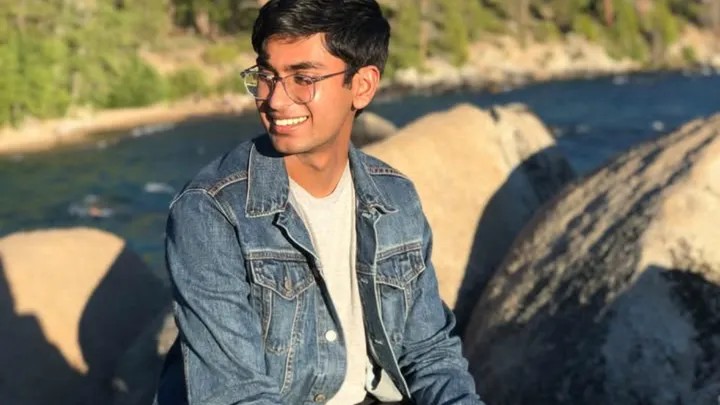
Suchir Balaji, 1998-2024
Suchir Balaji1998 – 2024
A whistleblower is dead. The questions are not.

He blew the whistle. A month later he was dead.

Suchir Balaji, 26, publicly argued that OpenAI's training practices violated copyright law, a position OpenAI disputes. In a New York Times copyright case, lawyers identified him as someone who might have relevant documents. Then he was found dead in a locked apartment. The official ruling is suicide. His parents say otherwise — and a lot of basic questions have never been answered.

Born Nov 21, 1998 Found dead Nov 26, 2024 Whistleblower vs. OpenAI
DEMAND 01

Sam Altman should step down

A CEO who does not publicly demand maximum transparency after a former employee and potential witness dies under disputed circumstances should not be trusted with AGI-scale authority.

DEMAND 02

An independent investigation now

Not merely the same local process that reached the original conclusion. Independent review, lawful subpoena power where available, and the family's evidence evaluated on the record.

Section 01 — Official vs. disputed

Two columns.
One side stopped asking.

Here is what the official agencies concluded, beside what the people closest to the case — and outside voices — have said on the record. Every line links to its source. Read both. Decide for yourself whether the questions are closed.

The official finding

San Francisco authorities

Authorities reported no evidence of foul play; the medical examiner's report supported the suicide ruling.

SF Office of the Chief Medical Examiner

The death was ruled a suicide; a February 2025 autopsy report affirmed that conclusion.

The named defendants

The wrongful-death complaint names Alta Laguna LLC and Holland Partner Group; those allegations remain unproven unless and until a court rules on them.

The disputed record

Poornima Ramarao — his mother

His parents commissioned a private autopsy that, they say, could not confirm the suicide verdict, and have demanded a full investigation.

Rep. Ro Khanna (D-CA)

Khanna called for a "full and transparent" review into the death after speaking with Balaji's mother.

Elon Musk

Replying to Balaji's mother on X, Musk wrote that the death "doesn't seem like a suicide."

The wrongful-death complaint

Filed Sept. 22, 2025, it alleges concealment, obstruction, and tampering — allegations the defendants have not answered and a court has not ruled on.

Section 02 — On camera

Watch how a CEO answers
when a dead man's name comes up

In September 2025, Tucker Carlson asked Sam Altman directly about Balaji's death. Watch the exchange. Then ask yourself one thing: is this the level of transparency the public should expect when a former employee and potential witness dies under disputed circumstances?

// Carlson–Altman interview, Sept 2025 — the segment on Balaji's death.

Carlson

"Do you think he committed suicide?"

Altman

"I really do." He then says he read the full medical record and that "it looks like a suicide to me."

Carlson

"Have you talked to the authorities about it?"

Altman

"I have not talked to the authorities about it."

Set aside every theory. Just sit with what he said in his own words, and the questions write themselves.

Q.01

Why hasn't he called the police?

A key witness against his company is dead. He says he read the entire autopsy. But he never once contacted the authorities. Why study the file and never ask the investigators a single question?

Q.02

Why is he certain, when the family isn't?

Altman reportedly admitted it "sounded very suspicious" to him at first. So what convinced him to stop asking — while the dead man's own parents are still demanding an investigation?

Q.03

Why retreat to "respect"?

When pressed, he pivots to how the family "deserves respect." But the family is the side screaming for answers. Why use their grief to end the conversation they're begging the world to have?

Q.04

Where's the demand for the truth?

If any third party was involved, he should want the facts established. If the official ruling is correct, he should want the record clear. Either way, why is the loudest voice in the room not Sam Altman's?

Section 03 — The timeline

This is not a closed case.
It's an open wound.

San Francisco police called it suicide and the medical examiner agreed. But Balaji's parents, Poornima Ramarao and Ramamurthy Balaji, filed a wrongful-death lawsuit in September 2025 alleging concealment, obstruction, and tampering. Here is what is on the public record.

Aug 2024
Balaji leaves OpenAI after raising concerns the company used copyrighted material to train ChatGPT.
Oct 2024
He goes public in The New York Times, arguing OpenAI violated U.S. copyright law — a claim OpenAI disputes. In the Times copyright case, lawyers later identified him as someone who might hold relevant documents.
Nov 18–21
He celebrates his birthday on a trip to Los Angeles / Catalina with friends.
Nov 22
Last contact with family. He had just ordered food and spoken to a relative. No note. No documented warning.
Nov 26
Found dead after a welfare check. Ruled a self-inflicted gunshot. Body in advanced decomposition.
Sep 22 2025
Parents sue Alta Laguna LLC (owner) and Holland Partner Group (management), alleging cover-up.
Apr 2026
Judge Christine Van Aken sustains a demurrer with leave to amend — the suit is not dismissed; the parents can refile.

The lawsuit raises questions that still have no public answer:

Q.05

Why only 2 of 7 days of footage?

The family requested seven days of surveillance — covering his LA trip. They allege they were given only two.

Q.06

Why was the cooperative manager fired?

The lawsuit alleges the manager who first shared CCTV with the family was then dismissed — and replacement management said the cameras "weren't working."

Q.07

Who installed an exhaust fan — and why?

The complaint alleges an exhaust fan was installed in the unit, which it describes as altering the scene and potentially destroying evidence.

Q.08

Where did his packages go?

A neighbor reportedly saw packages addressed to Balaji in the mailroom a month after his death. The family says they then disappeared.

Q.09

Why was false information given to police?

The lawsuit alleges management told SFPD he had "moved to New York" and was "unemployed" — both untrue.

Q.10

Why does the timeline not line up?

The family alleges elevator footage timestamped 7:30 PM conflicts with their own phone records of speaking with him minutes earlier.

$1M+
Damages sought in the wrongful-death suit
9
Causes of action in the complaint
0
Public federal investigations opened
Section 04 — The Silence

A witness is dead.
Why is the Valley so quiet?

When a 26-year-old who accused a $300-billion company of breaking the law turns up dead a month later, you'd expect an industry that never stops talking to have something to say. Instead — near silence.

Elon Musk, replying to Balaji's mother on X, wrote that the death "doesn't seem like a suicide." Congressman Ro Khanna called for a "full and transparent" review. The man's own mother has spent over a year demanding answers. But from the rest of the AI establishment — the founders, the investors, the safety researchers who lecture the public about catastrophic risk — where are the statements? Where are the calls for an independent review?

Q.11

Why won't OpenAI's peers ask a single public question?

The same leaders who warn about AI ending the world can't spare a sentence about a dead whistleblower from inside their own field.

Q.12

Why does it take outsiders to raise it?

A cable host and a rival CEO are doing what the safety-and-ethics crowd won't. What does that silence protect, and who does it protect?

Who has called for an independent probe? Who has offered to fund the family's forensics? Who has publicly asked OpenAI to cooperate? Why is the answer mostly "no one"?
Section 05 — The receipts

Don't take our word.
Read the public record.

Everything stated as fact on this page traces back to public reporting, court filings, and official records. Start here, and follow it wherever it leads.

Why it matters here

He was a witness against the company
at the center of the loop.

In a Nov. 18, 2024 court filing, the New York Times's lawyers named Balaji among people who might hold relevant documents in their copyright case against OpenAI. His claims struck at how the largest AI models were actually built.

That same company sits at the hub of a financial machine where capital, chips, compute, and revenue circle through the same handful of balance sheets. Follow the money — then ask why so few of the powerful people inside it will say his name out loud.

See the AI Capital Loop →
Section 06 — Help the family

His parents are paying
for the truth themselves.

No agency reopened the case. So Suchir's mother and father are funding the investigation out of their own pockets — digital forensics, an independent autopsy, witness interviews, lawyers — and they've gone into debt doing it. You can help carry that cost. Two ways, both honest about where the money goes.

Option A · 100% · no middleman

Give to the family's own fund

“Justice for Suchir Balaji,” organized by his mother Poornima Ramarao, funds the independent investigation into his death. It's covered by GoFundMe's Giving Guarantee and every donation is listed publicly. Your money goes straight to the family.

Give on GoFundMe →
Option B · profit donated · receipts posted

Buy the merch

Wear the argument and fund the family in one move. We keep $0 — every dollar of profit after printing and fees is donated into that same GoFundMe, logged in a public ledger you can check against GoFundMe itself.

The pledge & the receipts →

⚠ Only the GoFundMe organized by Poornima Ramarao is official. Treat crypto wallets and any “SUCHIR” coin using his name as unverified — do not send money there. See how we keep this honest →